How Can Two Game Clocks Disagree? It Could Be Just Two Frames.

Why a few frames of signal-path delay can make broadcast and replay clocks appear to disagree—and how we check synchronization in Big Ten production.

I don't normally write about sports here. In fact, i debated about writing this for my readers. Ultimately, this is about more than American College Football. It's about signal flow...and why it matters.

Last Saturday, Michigan beat Western Michigan 13–12 on September 5 after getting one more shot at a Hail Mary in a high-profile college football matchup.

💡
To be clear: I wasn't working this production, and I don't know its exact signal flow. Without the engineering documentation and timing measurements, I can't say what caused the discrepancy. But I can explain how a discrepancy like this can happen.

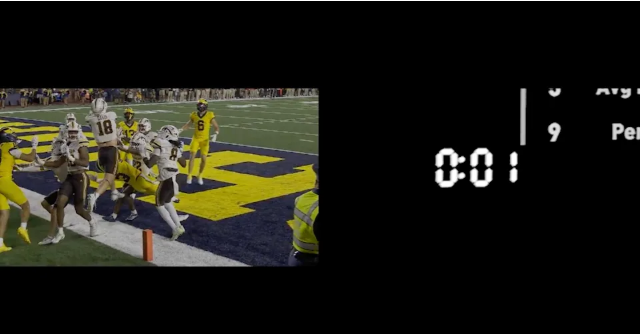
Big Ten statement and replay-video preview. Watch replay. Screenshots are not frame-matched.

On television, the clock appeared to reach 0:00 before the defender touched the ball.

Game over?

The replay officials saw one second remaining. Michigan got another play and scored.

Watch NBC Sports’ video of the controversial ending.

Watching the argument unfold, I kept coming back to something we deal with behind the scenes in live television, and one technically plausible explanation for what viewers saw.

Contrary to what the social media accounts are telling you...this discrepancy has a simple and technically plausible explanation that doesn't require anything unusual:

Signal paths.

This post is for subscribers only

Subscribe to Cloud Studio Masters newsletter and stay updated.

Don't miss anything. Get all the latest posts delivered straight to your inbox. It's free!
Great! Check your inbox and click the link to confirm your subscription.
Error! Please enter a valid email address!